Ivy gourd
Campaigns Published















Campaigns Unpublished
No Content Unpublished
Scientific name
Coccinia grandis
English Name
Ivy gourd
Malayalam name
കോവയ്ക്ക
Common name
Scarlet gourd,Tindora
Description
- Habit : Climber
- Habitat : thrives primarily in warm, tropical, and subtropical climates
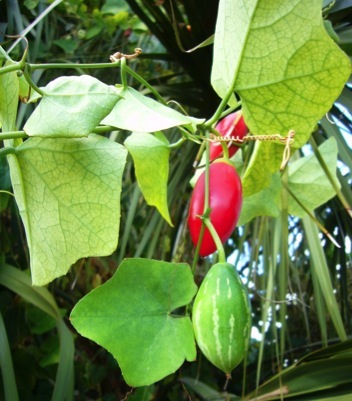
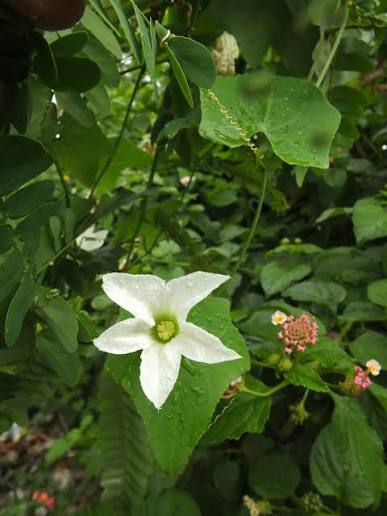
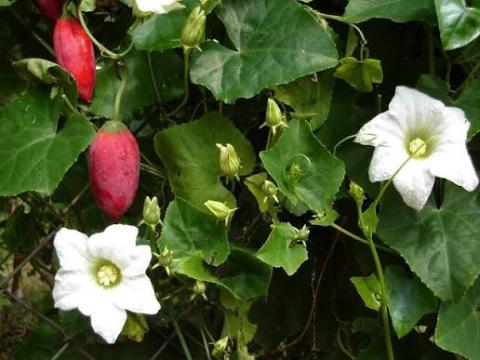
- Leaves : heart-shaped or five-lobed,broad, and arranged,smooth, dark green upper surface
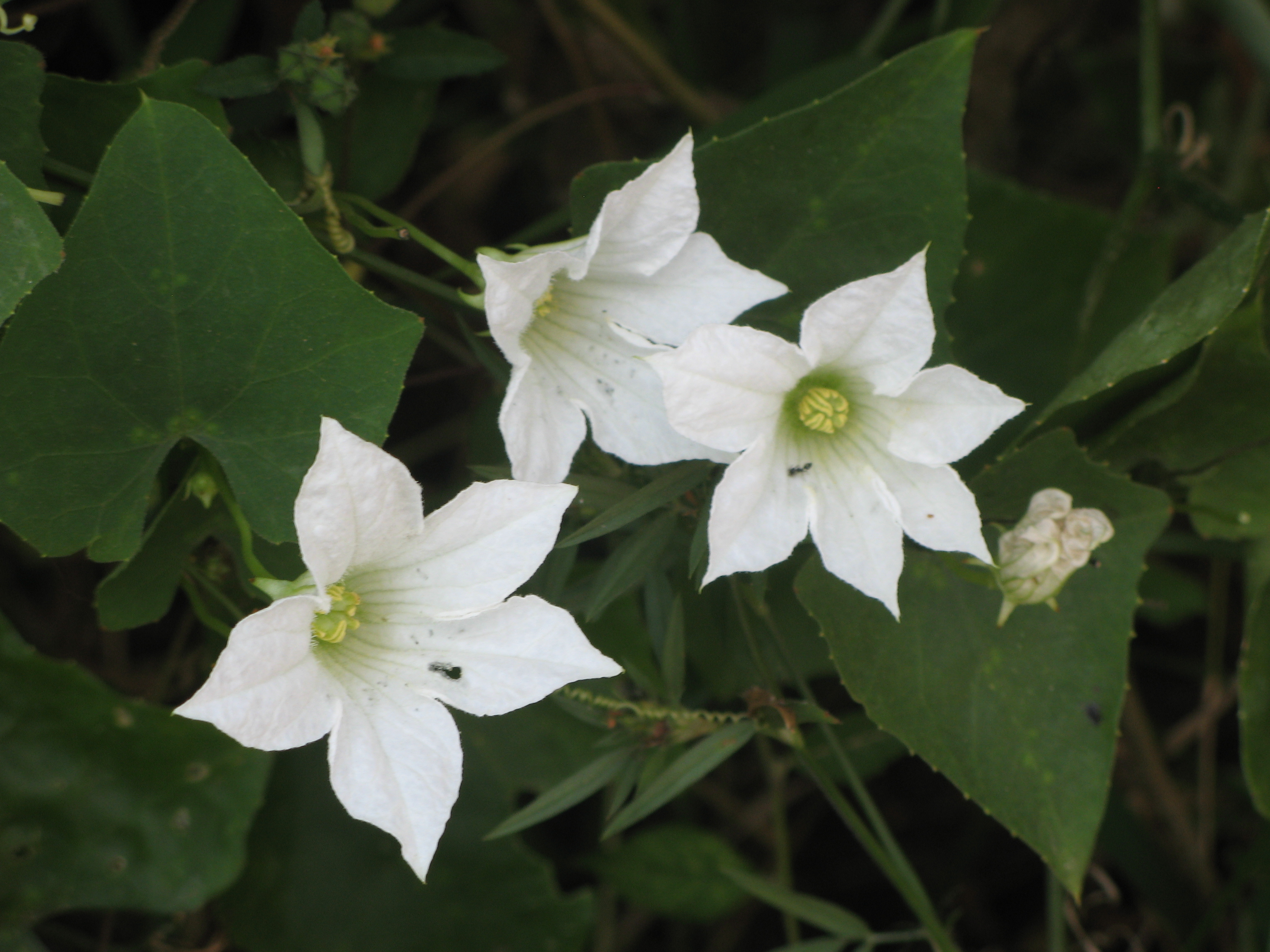
- Flowers : large, white, and star-shaped with five distinct petals.
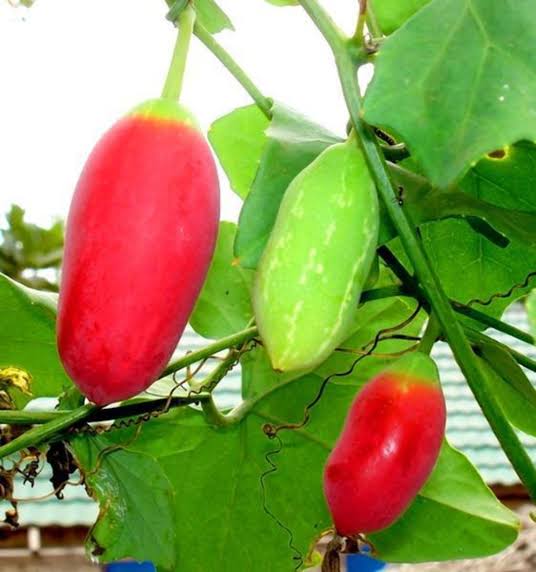
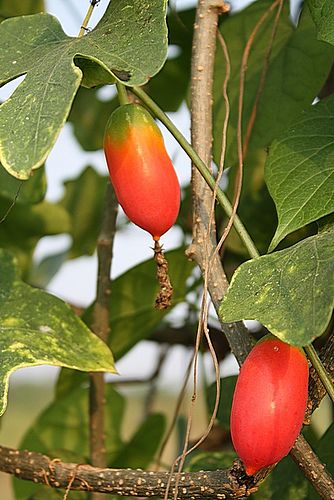
- Fruits : smooth, oval to oblong, and looks like a tiny cucumber or miniature watermelon
Uses
Urinary issues,Inflammation relief,Mouth Ulcers
Parts used
Roots,leaves,fruit
How to use
- Urinary issues : The thick, tuberous taproot is juiced or dried into powders for deeper metabolic and urinary issues.
- Joint Swelling & Pain : Warm the fresh leaves mildly over a pan (often with a drop of castor or sesame oil). Wrap them carefully around the swollen, aching joint.
- Mouth Ulcers : Thoroughly wash a fresh, green, raw tindora. Chew it slowly, allowing the juice to coat the ulcers before swallowing.
Conservation
Propagation & Cultivation
It is primarily propagated using stem cuttings with 2 to 3 nodes, which root much faster and guarantee the fruit quality of the parent vine compared to planting from seeds. For successful cultivation, place the vine in full sunlight and well-draining, fertile soil, ensuring you provide a strong trellis or netting to support its aggressive, heavy climbing habit. Because the plant must cultivate at least one male plant for every ten female plants close together to ensure proper insect pollination and a successful fruit harvest.