Greater Yam
Campaigns Published










Campaigns Unpublished
No Content Unpublished
Scientific name
Dioscorea alata L.
English Name
Greater Yam
Malayalam name
ഹിമാലയൻ കാച്ചിൽ
Common name
Purple Yam
Description
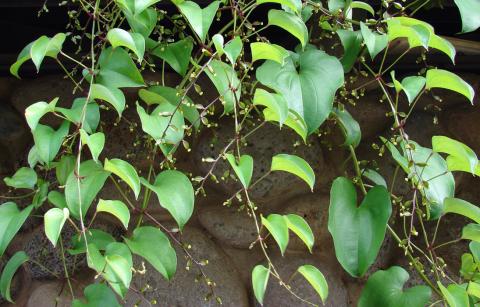
- Habit : Climber
- Habitat : Cultivated widely in tropical and subtropical regions; thrives in warm, humid climates.
- Leaves : Opposite, broadly ovate to heart-shaped (cordate), with deep basal lobes and prominent longitudinal veins.
- Stem : Twining, uniquely winged or angled, often purplish, producing aerial bulbils.
- Tubers : Large, fleshy underground tubers with white, pink, or deep purple flesh.
Uses
Leprosy, tumors, fever, gonorrhea, hemorrhoids, nutritional deficiencies
Parts used
Tubers, bulbils
How to use
- Treat nutritional deficiencies : The tubers are a major source of carbohydrates and are consumed boiled or roasted for general health and to treat nutritional deficiencies.
- Skin diseases : A paste or poultice of the raw tuber is applied topically to treat skin diseases, minor tumors, and insect bites.
- Fever, hemorrhoids : A decoction of the tuber is traditionally used as an internal remedy for fever, hemorrhoids, and mild digestive issues.
Conservation
Propagation & Cultivation
Propagated vegetatively using small whole tubers, tuber cuttings (setts), or aerial bulbils. Plant in well-draining, loose, loamy soil formed into mounds or ridges to allow the large tubers to expand freely. Requires warm temperatures, full sun to partial shade, and a sturdy trellis or support system for the vigorous vines to climb. Maintain consistent soil moisture during the active growing season. Tubers are typically ready to harvest 8 to 10 months after planting, signaled by the leaves yellowing and dying back.